Consider an enterprise application that has been running for twenty years. The technology is dated, finding people who understand it is becoming difficult and even a small change takes weeks of effort. Yet the application continues to run because modernizing it is seen as too expensive, too complex or too risky.
Deloitte’s 2026 report, Bridging the Tech Value Gap, found that a majority of surveyed business leaders believe that 21% to 50% of potential enterprise value remains untapped in technology investments they have already made. Some of that potential may sit in applications and systems that businesses have learned to live with. Even when the need for modernization is clear, the cost and complexity can make it difficult to justify.
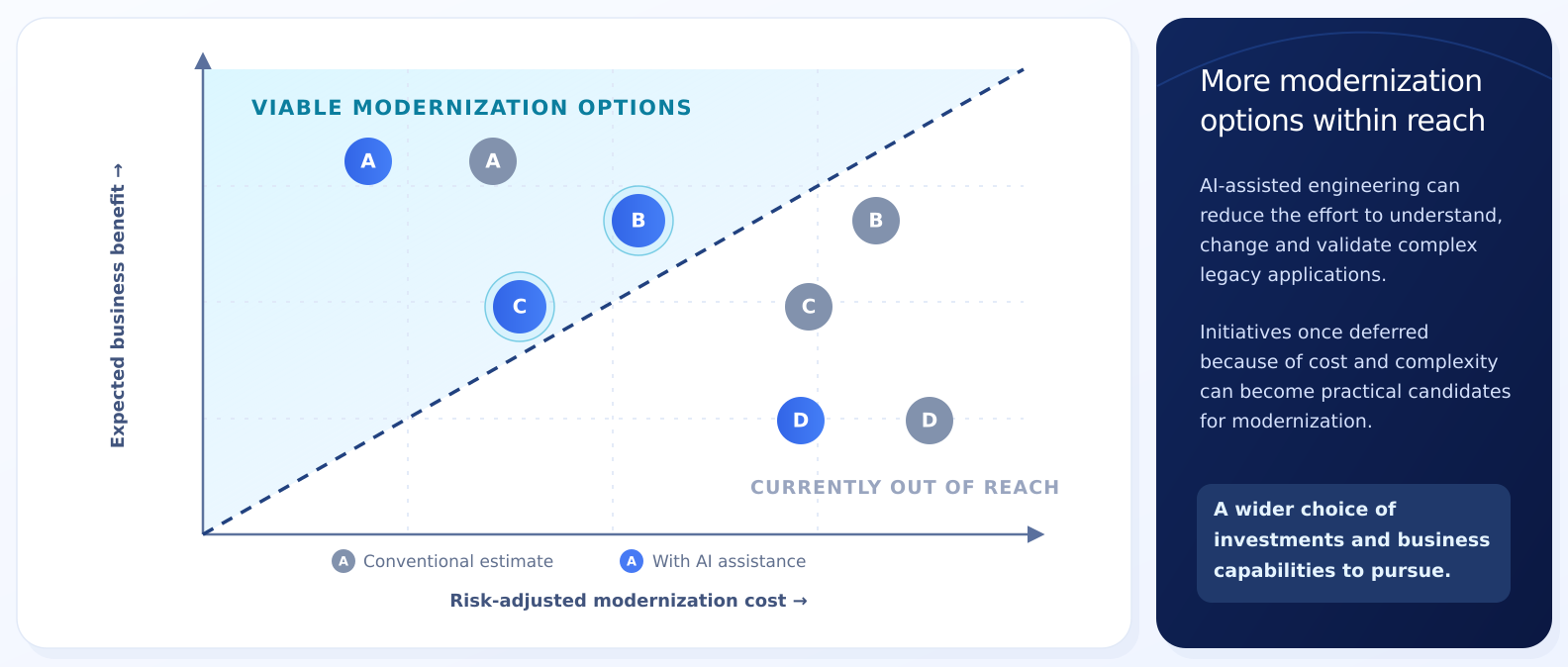
Much of the attention around AI-assisted modernization has focused on productivity: analyzing and converting legacy code, reducing engineering effort and migrating applications faster. Lower costs could also allow businesses to reconsider projects they previously could not justify.
When the Economics of Modernization Begin to Change
For years, organizations have had to make difficult choices about which applications to modernize and which ones to leave untouched. Some are too critical to ignore but too complicated to change. An older application’s architecture may be poorly documented, the original developers may have moved on and multiple integrations and customizations may make it difficult to understand how one change affects the rest of the system. Before modernization can begin, engineering teams often spend considerable time understanding the application, documenting dependencies and assessing risks.
AI-assisted engineering can help with some of this work. It can support code analysis, identify dependencies, generate documentation, assist with code transformation and accelerate testing. Tasks that previously required significant manual investigation may become more manageable.
Engineers still need to make architecture decisions, address security requirements and protect business continuity. Even a meaningful reduction in effort, however, can change the economics of a project. An initiative repeatedly postponed because of its cost may now be worth reconsidering.
This could also change how organizations prioritize their modernization investments. They may be able to modernize a wider portfolio within the same budget and address technical debt they have deferred for years. AI may therefore influence which applications organizations choose to modernize.

Looking Beyond the Migration Itself
Take a financial services organization operating an older application that supports a critical business process. The application may be reliable, but introducing new features takes considerable time. Integrating with newer platforms requires workarounds, and even a straightforward business change may involve multiple teams and lengthy testing cycles.
Moving this application to a modern architecture could improve its maintainability and performance. New digital services may become easier to introduce, integration with partners could become simpler and product teams could respond faster to customer requirements.
These outcomes depend on the architecture, modernization approach and how effectively the business uses the new capabilities. A completed migration alone does not guarantee them.
There is also an opportunity to make better use of engineering capacity. In many enterprises, experienced engineers spend considerable time maintaining legacy applications, investigating dependencies and working within the limitations of older systems. If AI-assisted modernization can reduce some of that effort, organizations can redirect engineering talent towards developing new products and capabilities.
Businesses also want to introduce AI into their existing technology environments. Older systems can constrain plans for intelligent applications, automated workflows and new digital experiences. Modernization can help prepare those systems, while AI may reduce the engineering effort involved.
At AppHelix, we believe modernization discussions should start with the business capabilities an organization wants to build.
Measuring What Really Matters
Completing a migration ahead of schedule or reducing engineering costs are valuable achievements. Assessing the application six months or a year later helps establish whether those gains have translated into business value. Teams can examine how long enhancements take, how quickly they can introduce new services and how much engineering time goes into new capabilities compared with maintenance.
Business and technology leaders can start by revisiting applications previously deferred because of cost or complexity. Assess whether AI-assisted engineering changes those estimates, which business capabilities the work would enable and how the organization would measure the result.